People of Volcano
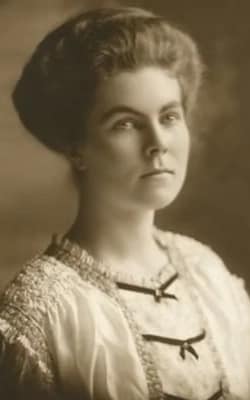
Mrs. C.C. Kennedy
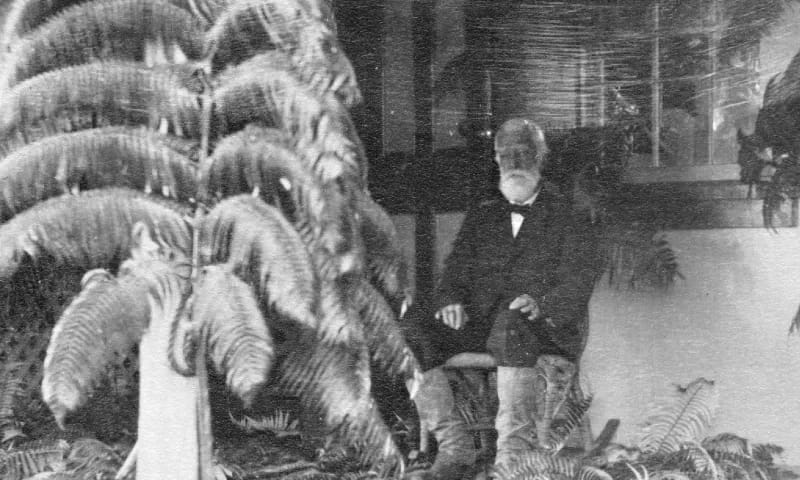
Laura Imogen Kennedy (aka Mrs. C.C. Kennedy) embodied the 20th-century societal matriarch. Young, beautiful, and married to one of Hawaiʻi’s wealthiest men, she moved easily between Honolulu, Volcano, and Hilo, hosting and attending countless dinners, balls, and parties. A world traveler and civic leader, she helped found the Hilo chapter of the Outdoor Circle, funded public improvements (including a library addition, a swimming pool for Hilo High, and the restoration of the whaling ship Falls of Clyde), and supported numerous other causes. Accomplished in dance, violin, and golf, she is said to have been the first woman on Hawaiʻi Island to own a car—a 1906 Cadillac she later traded for a Baker Electric Phaeton.
Mrs. Kennedy and her husband, Charles Clark Kennedy (a leading sugar magnate, inventor, and founder of the Waiākea Mill) created the finest estate still in Volcano Village and contributed to the development of Liliʻuokalani Gardens in Hilo. Charles also helped build the road between Glenwood and Volcano and was an avid golfer and founder of Hilo’s first rowing club.
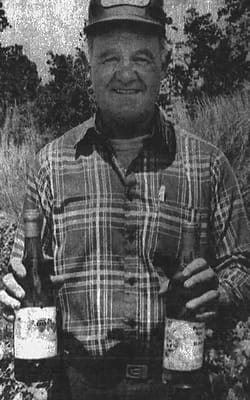
Lynn "Doc" McKinney
Retired Oʻahu veterinarian Lynn “Doc” McKinney founded the Volcano Winery in 1986 and it quickly became a unique destination for visitors. Born in Kansas and raised on a Washington farm, McKinney met his Hilo-born wife, Alana, at Washington State University. After earning a degree in engineering and a doctorate in veterinary medicine, he practiced veterinary medicine on Molokaʻi and Oʻahu, ran a riding stable, planted seedless lime groves, imported Hawaiʻi’s first Percheron horses, and even worked as a commercial fishing captain—all while experimenting with making his own beer and wine.
In Volcano, the McKinneys developed a 64-acre property near the golf course, planting four grape varieties (Pinot Noir, Gewurztraminer, Isabella, and Symphony) at nearly 4,000 feet above sea level. By 1991, their first wines were on the market including grape, honey, and tropical fruit blends featuring starfruit, lilikoi, and papaya. The winery opened to the public in 1993, turning McKinney’s hobby into a full-fledged business. After McKinney’s death in 1998, the winery was sold in 1999 to Californian Del Bothof, while two of McKinney’s daughters continued working at the family-run winery for many years.
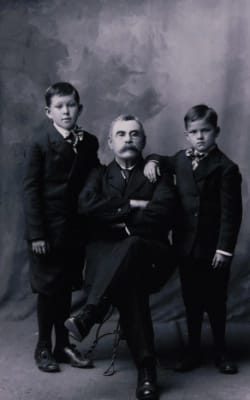
Peter Lee
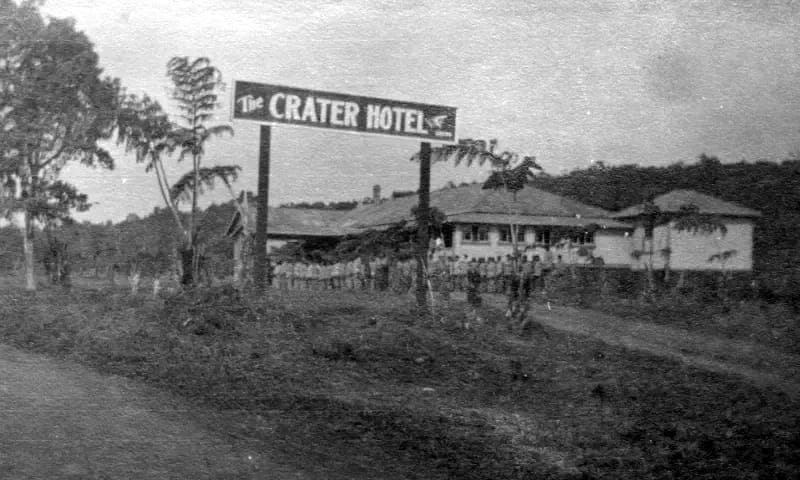
Peter Lee was a pioneer of Volcano tourism. Between 1891 and 1898, he managed the Volcano House before opening his own hostelry, the Crater Hotel, near today’s Volcano School of Arts and Science along Old Volcano Road. Aimed at local visitors rather than international tourists, the hotel featured 14 bedrooms, a large dining room for nearly 100 guests, separate men’s and women’s gathering rooms with fireplaces, and its own acetylene plant to light 100 lamps. Rooms cost $3 per night, meals 75 cents, and weekly board $17.50.
The hotel’s 1911 opening was a gala event, with more than 400 attendees from Hilo enjoying a free dinner, dance, and special train service for those unable to stay overnight. In 1913, Arthur T. Short purchased the hotel and ran it until 1921, when the Inter-Island Steam Navigation Company acquired it and the Volcano House. The Crater Hotel buildings were dismantled, and their lumber and furnishings were used to expand Volcano House from 80 to 115 rooms. Lee continued to live in his Volcano Village home on the corner of Haunani and Old Volcano roads until his death in 1933. The house remains in the family today.
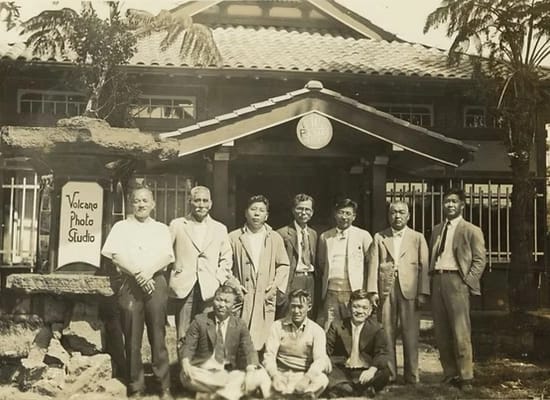
Kenichi Maehara
Kenichi Maehara was the official photographer and photo concessionaire for Hawai‘i Volcanoes National Park (then Hawaiʻi National Park) from 1930 to 1941. His striking images of Kīlauea and Mauna Loa eruptions were distributed worldwide and helped popularize the Volcano area.
Born in Hiroshima, Japan, Maehara immigrated to Hawai‘i in 1896 and opened a Hilo photo studio in the 1920s. In 1930, he established the Volcano Photo Studio near the park’s current visitor center, offering full photographic services and selling his dramatic images, lantern slides, colorized postcards, and photos by other photographers.
“I am a happy man today because photographing is both my hobby and my lifework,” he told a newspaper in the 1930s.
Maehara’s life took a tragic turn, however. In 1935, during a Mauna Loa eruption, he photographed U.S. military planes dropping bombs on lava at the suggestion of geologist Thomas Jaggar. After the attack on Pearl Harbor, those same photos were used as evidence of disloyalty, and Maehara was arrested and sent to internment camps in Honolulu and on the U.S. mainland. While detained, park officials seized his equipment, boarded up his studio, and destroyed his concession business. He never worked in the park again.
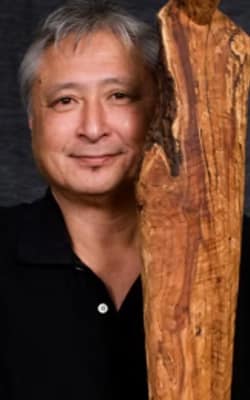
Randy Takaki
Randy Takaki’s sculptures are powerful and mysterious. Over decades in Volcano, he created nearly 6,000 elongated figures often described as guardians, wood spirits, or monks. Each piece was unique crafted from wood, stone, and sometimes chicken wire. Ranging from a few inches to over 10 feet tall, they conveyed both human and spiritual presence, evoking a reverence for life itself.
“His goal was to do ten thousand of these guardians,” said fellow sculptor Glenn Yamanoha after Takaki’s death in 2016. “The last I talked to him, he had done five thousand eight hundred something.”
Working from a rusted corrugated-metal studio on Old Volcano Road, Takaki’s figures lined every wall, creating the sense of a sacred, well-worn temple of art.
Visitors felt the impact profoundly. Artist Lisa Mauer Elliott wrote that encountering the figures was like “an encounter with the sacred, like walking around as a soul,” inspiring grief, love, and awe.
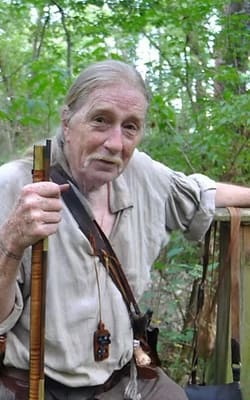
Boone Morrison
Boone Morrison was Volcano’s true Renaissance man. As a photographer, architect, writer, musician, teacher, preservationist, art center founder, historian, and more, he touched nearly every aspect of village life during his almost five decades in Volcano.
Born in California to an artistic family, Morrison moved to Hawai‘i in 1959 after graduating from Stanford. He helped found Honolulu’s influential gallery, The Foundry, co-founded the environmental group Life of the Land, and in the early 1970s settled in Volcano where he would spend the rest of his life. He became known for his stunning photographs of lava and hula dancers, his work restoring historic buildings, and his designs blending Hawai‘i’s traditional kama‘āina style with contemporary approaches. His motto, as his wife Tamara said, was “ahead of the times by honoring the past.”
Morrison co-founded the Volcano Art Center in the original 1877 Volcano House, transforming it from a decaying storage shed into a vibrant gallery showcasing nearly 300 Hawai‘i artists. The Art Center now includes a five-acre campus hosting classes, performances, and community events in a forest preserve setting. He also spearheaded the construction of a pa hula for hula kahiko performances in the national park, produced books and documentaries on Hawaiian life, played in bands, and created historically accurate models now held in museum collections from Honolulu to New York City.
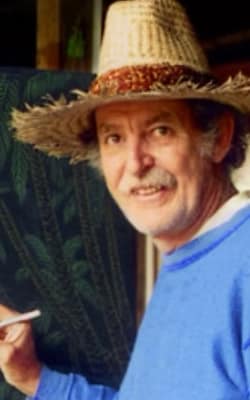
Dietrich Varez
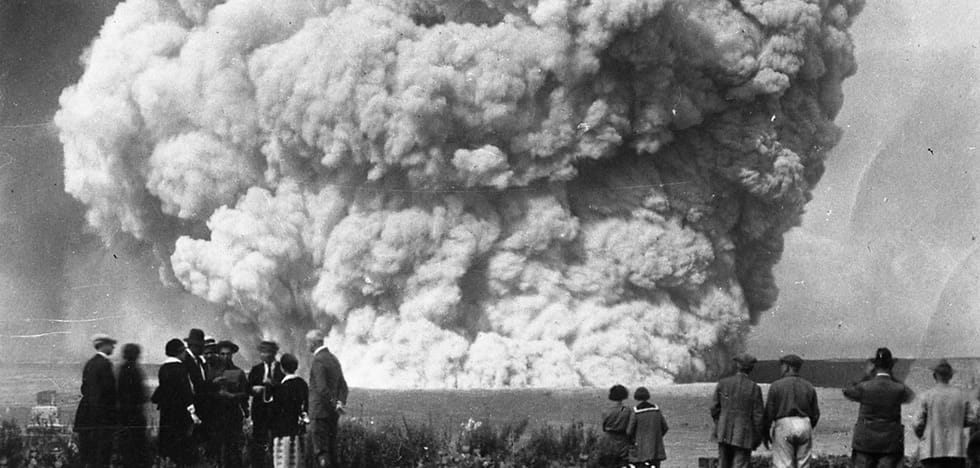
Dietrich Varez was one of Volcano’s most celebrated artists. For nearly 50 years, he devoted himself to the spirit of Volcano, its art community, and the surrounding rainforest, producing hundreds of block prints depicting Hawaiian culture, mythology, and nature. An early supporter of the Volcano Art Center, he taught classes for decades and shared his work widely.
Born in Berlin, Varez moved to Oʻahu with his family in 1948, served in the U.S. Army, and earned bachelor’s and master’s degrees from the University of Hawai‘i. In 1965 he moved to the Big Island, purchasing nine acres of forest land sight unseen. He initially worked as a bartender at Volcano House and a groundskeeper at the Volcano Golf Course while carving Pele images from scrap wood to sell to visitors. By 1974, he was selling wood and linoleum block prints at the newly opened Volcano Art Center, and he never stopped producing and sharing his art which included books, Hawaiian shirts for Reyn Spooner, and countless prints sold at modest prices.
Varez and his wife Linda lived a self-sufficient life along Mountain View Road, but he remained deeply connected to the Volcano community and other artists. He passed away in 2018. Today, the main gallery at the Volcano Art Center’s Niʻaulani Campus bears his name, and a large mosaic outside commemorates his enduring legacy.
James Tsuchiya
James Tsuchiya came to Volcano straight out of high school to begin his career as a cashier and bookkeeper at the prominent Volcano House. Over the next three decades, he married and raised a family, built one of the first homes in Volcano Village, helped found the Japanese School, and played a key role in the town’s early growth. Tsuchiya’s work at Volcano House put him in contact with notable visitors, including President Franklin Roosevelt, Amelia Earhart, and Princess Victoria Kaʻiulani.
Born in Wakayama, Japan, Tsuchiya immigrated to Hawai‘i in 1905, attended local schools including Mills High School, and married Estelle Dung Moi Goo of Kaua‘i in 1916. In 1925, he became president of the Japanese School Association, helping build the school where his children attended. The family also built a home on a 4.25-acre plot near the current Kīlauea Lodge, wiring it for electricity himself while Estelle tended a large garden with cherry trees and vegetables.
By the 1940s, Volcano Village had grown with more homes, roads, and commerce. When the Volcano House burned in 1940, Tsuchiya briefly worked as a car salesman. After the Japanese attack on Pearl Harbor in 1941, he was barred from joining Civil Defense and labeled “the enemy” due to his ancestry—though local residents vouched for him. Eventually, the family sold their home in 1943, and James moved to Honolulu where he worked in a tent and awning company and as a night clerk at the Alexander Young Hotel. He died in 1948. Estelle spent her later years working and visiting her daughters, passing away in Florida in 1977.
CONTINUE LEARNING
Explore Volcano's Storied Past
Land & Culture
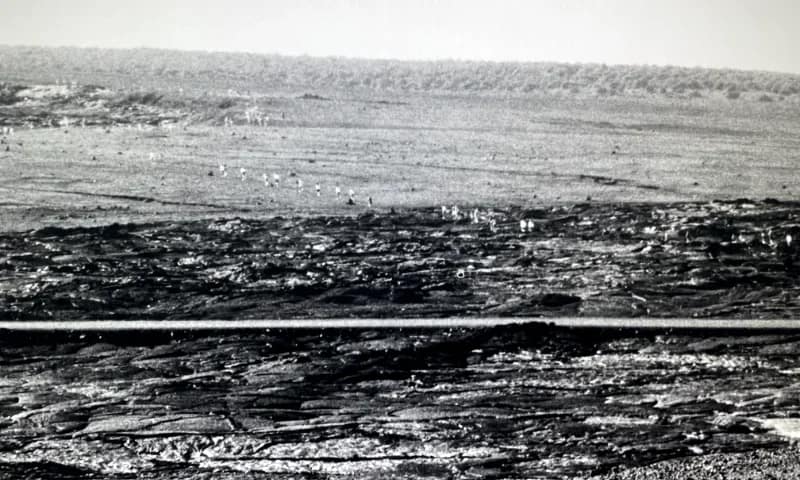
Learn about the deep relationship between people and ʻāina in Native Hawaiian culture as well as past and present efforts to mālama (care for) Volcano's unique ecosystems.
Historic Places
Learn the significance of Volcano's historic buildings and places that tell the stories of the village's growth, shared values, and everyday life across generations.
Coming of Age
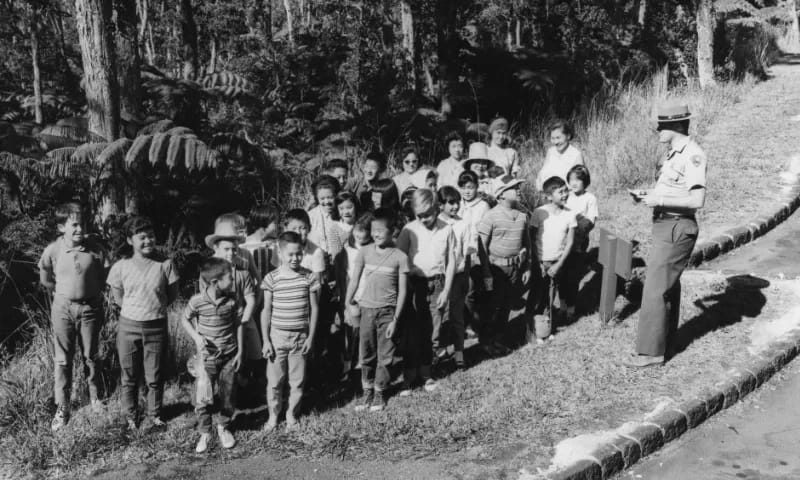
What was it like to grow up in Volcano? Read this curated collection of anecdotes by village residents recounting their personal coming-of-age experiences.
GET INVOLVED
Support Our Mission
Volcano Community Foundation is a nonprofit dedicated to preserving and showcasing Volcano's past while working together to meet today's needs and enrich the future of our community.