Coming of Age
Stories: Growing Up in Volcano
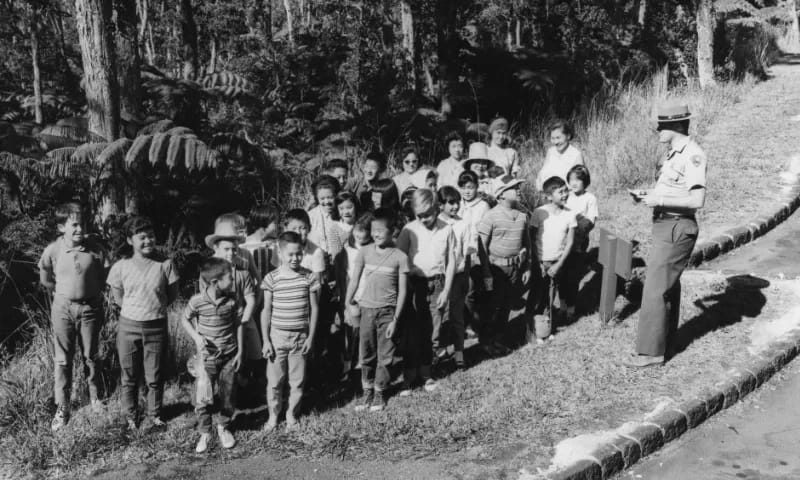
For children who grew up or spent summers in Volcano, the village felt like freedom. Days were spent exploring the slopes of the active volcano—no tour buses, no parking lots, just a few cars and the occasional horseback rider. Kids rented bikes at the military camp to cruise around the crater and through the still-unlit Thurston Lava Tube (pushing uphill on the way home). They picked ʻōhelo and blackberries for pies, stopped by Hongo Store for sushi or boiled peanuts, and at night gathered in friends’ homes to kanakapila—playing guitars, singing, or telling spooky tales by the fire. These are some memories of children who grew up in Volcano or visited frequently before World War II.
Pam Barton
"We hiked when we came up (to Volcano), went to the forest. My mom always made sure that we always had a little snack in our bags. Every berry season we came to get the berries. We spent some time in the park, riding bicycles or roller skating, which wasn’t all that great because the roads weren’t all that good; it was hard when they weren't paved."
Helen Tsuchiya
"We had the run of the nearby park, taking walks in the woods, hiking along the Byron Ledge Trail, down into Kīlauea Iki or part way across Kīlauea caldera, where we could pick ōhelo berries, look for other interesting plants or peer into the lava caves."
Meleana Manuel
"After school, all the kids would stop at Okamura Store, where they could still have their afternoon treats added to the family tab, which the owners kept on the back of torn-off cigarette cartons. Once the whole thing was full, it was time to pay your family bill."
David Manuel
“Back in the 70s, Mauna Loa Estates was the place where you came to learn how to drive a car on the unpaved roads. Later, it’s where you went to go drag race against others who weren’t old enough to have an official driver’s license.”
Jim Mitchell
"We used to come over from Honolulu with our parents. We had a helluva time every time we came."
Fran Jackson
"We were outside all the time. It was safe to be out. We did not wear shoes. We were not allowed to just wander anywhere. And so I didn’t get to know a whole lot of kids around here. My brother and I played with ourselves. At the cross street my brother had a fort on one side and I had a fort on the other and we threw hunks of hapuʻu at each other. That was our entertainment. And we played a lot of board games, that kind of stuff."
Loma Larsen-Jeyte
"During the midst of World War II, in 1943, my parents and I moved from Maui to Hawaiʻi Island to Volcano Village. My father became the first chief of police on the island and friends found us a home where the Volcano Post Office is now. I recall a spacious plantation/craftsman style home with a broad lanai and garden filled with camellia, azalea, plum trees, and a small vegetable patch.
The caretaker had no power and prepared food and cha (tea) on his wood burning stove. A kerosene lantern served as his only light. He would invite me into his tiny home and offer me cha. Then he would sing Japanese songs, love songs and maybe some drinking songs. I recall him getting tearful and sentimental when he sang. Once he showed me money hidden under the mattress. Funds to take him home someday, he said. I cherished my visits to his wee cabin with song, cha, and warmth from his stove."
Jane Yamashiro
"Even when we had to work we were having fun. We children were responsible for the garden’s upkeep, weeding and mowing it as things grew quickly in the lush climate. The yard was also the scene of many baseball games, water fights, and races; it was the center of activity for my brothers and their friends on those rare breaks from working in the fields. Planting, picking, washing, and packing cucumbers were a constant in our summer lives. While kids in town went to summer camp, we harvested crops.
In the early part of summer, I remember dreaming about cucumbers—looking under the leaves that had little nettles like barbs that made our arms red and itchy. After hours of working in the sun, we had bags and bags of cucumbers in the carport next to our garage, piled at least four feet high. Under the bright light bulbs were tubs of water and stools waiting for five children to wash the cucumbers, box them in preparation for the market, and load them onto trucks already stacked with cabbages, flowers, and lettuce.
The evenings were when all our talking took place. While on the farm during the day, we were separated from one another and worked alone. Sometimes it was fun, but it was also a time for difficult lessons to be learned."
Tom English
"There was a great diversity in the neighborhood, and in the kids I went to school with. We had the whole community there: the Japanese farmers, a smattering of Hawaiians, the National Park kids, naturalists, the kids of rangers. And we had USGS kids, kids of PhDs, and the KMC kids, or the military brats, as we called them. There was tremendous diversity, and it was a rich environment to grow up in."
Ellen Sisson Jackson
"Every birthday (at Keakealani School) was a signal for a celebration. This consisted of a field meet, races, games followed by refreshments, homemade cake and lemonade. Sometimes we would have ice cream but this was a rare treat. The little girls would sneak out of class and go over to the teacher’s cottage and then come back an hour or so later with their results, usually very original fudge.
The school day started with a prayer and a song. It was expected that everyone would keep his head bowed and eyes closed to ensure proper attention. One day, I told Grandma that Louis had not had his eyes closed. Grandma wanted to know how I could have known his eyes were open if mine had been closed."
Helie Rohner
“We were summer folk in the ’30s. There were just a few permanent residents, retirees, farmers, gardeners, and vacation homes owned by the plantations. Only the homes on Old Volcano Road had electricity; everyone else had to use kerosene lanterns. Then Coleman lanterns came in, and all of sudden we had a bright light. Hot water came from pipes that were set in the back of the fireplace. For refrigeration, we had an old fashioned ice chest. On the back porch, there was a pie cabinet, made with wire so the cool air cool keep them. There was no TV, no radios, no cars, but we never lacked for anything to do.
Our family had our horses. When school ended, we rode the horses from Hilo to Volcano. We’d start at 5 a.m. and got there by 2 p.m. There were bridal paths on the park, golf course area, and Keauhou ranch and we rode up the Mauna Loa trail. We’d go camping on the back end of Kīlauea Iki at Hilina Pali, and we would catch a baby goat and take it home as a pet.
The lava tube was a favorite place, but there was just a slippery, muddy trail then. We would make torches from soup cans filled with burlap and kerosene to walk through the lava tube. We played Cowboys and Indians, built tree houses. On rainy days, we played cards.”
CONTINUE LEARNING
Explore Volcano's Storied Past
Land & Culture
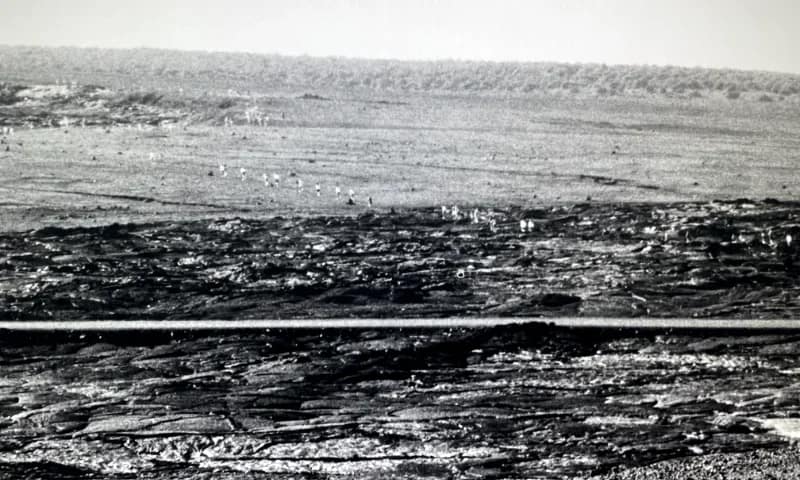
Learn about the deep relationship between people and ʻāina in Native Hawaiian culture as well as past and present efforts to mālama (care for) Volcano's unique ecosystems.
Historic Places
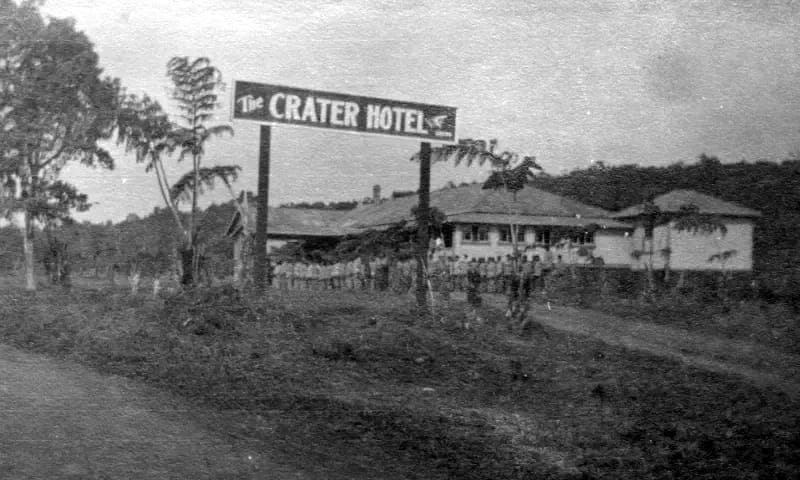
Learn the significance of Volcano's historic buildings and places that tell the stories of the village's growth, shared values, and everyday life across generations.
People of Volcano
Meet some of the outstanding people in Volcano's history who influenced and helped shape the village community into what it is today.
GET INVOLVED
Support Our Mission
Volcano Community Foundation is a nonprofit dedicated to preserving and showcasing Volcano's past while working together to meet today's needs and enrich the future of our community.