
Timeline
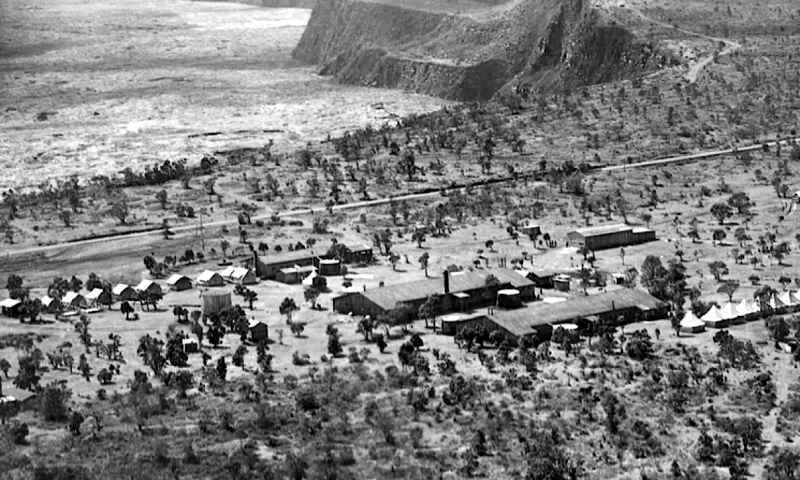
Chronology of Volcano Village
Volcano Village is one of the few communities in Hawaiʻi located within a native forest. For more than a century, people have been drawn to its lush greenery, cool climate, active volcano, and strong sense of community, creating a place shaped as much by its residents as its remarkable landscape. Residents often describe Volcano as unique, magical, spiritual, sacred, and deeply rooted in community.
1819
ʻOlaʻa Opens
Kapu lifted on ahupua‘a of ‘Ola‘a. Dense ʻōhiʻa forest had been the domain of birdcatchers.
1825
Trail Established
Queen Regent Ka‘ahumanu orders a trail to be built from Hilo to Volcano for Lord Byron and officers. The chiefs of Hilo and Puna cut a trail between the two ahupua‘a of ‘Ola‘a and Keaʻau.
1840
ʻOlaʻa Route
‘Ola‘a route to Kilauea taken by U.S. Exploring Expedition.
1848
ʻOlaʻa Relinquished
‘Ola‘a, Puna relinquished by Kaunuohua to King Kamehameha III and retained as crown land.
1866
Land Privileges
April: Thomas Spencer applied for the right to collect pulu in ‘Ola‘a. The lands were noted for their growth of hapu‘u tree ferns. Native applicants Kaʻaukai and Kaʻaua also sought a five-year lease to collect pulu.
1873
‘Ola‘a route to Kīlauea taken by Isabella Bird and Charles Nordhoff, author of “Sandwich Islands.”
1875
Guide Book
Henry M. Whitney publishes “Hawaiian Guide Book" which includes commentary on travel via the old roadways from Hilo to Kīlauea. One passage read: “The overland trip from Hilo to the crater, a 30-mile uphill trail, would try the patience of most travelers.”
1875
‘Ola‘a route to Kīlauea taken by E. S. Baker of Honolulu. Thrum’s Annual for 1877.
1882
Keaʻau Purchased
January: Lunalilo’s land, the ahupuaʻa of Keaʻau, offered at public auction and bought by William Shipman, Calp. Elderts, and Samuel M. Damon for $20,000. In 1883, Shipman and Damon became co-owners; Shipman eventually became the sole owner.
1886
Lyman House
Levi Lyman House built at 28 miles in Volcano. In 1985, it would become Gordon Morse’s My Island Inn, a bed-and-breakfast in Volcano Village.
1888
New Road
The Hawaiian Kingdom authorized a new carriage road from Hilo to Volcano, appropriating $30,000 to replace the old horse trail. Tourists had previously traveled two hours by stage coach from Hilo, then 4.5 hours by horse or mule. Surveyors laid a new route inland of the old trail above Ola‘a, opening the area for homesteading. The road curved north at Akatsuka Bend, following the ahupua‘a boundary between Ola‘a and Kea‘au. Before its completion in 1894, the area now known as lower Volcano Village was already being used for cattle pens.
In the same year, the ‘Ola‘a route to Kīlauea was taken by M. Forsyth Grant, Canadian, author of “Scenes in Hawaiʻi.”
1891
Rest House
J. R. Wilson built Mountain View House as a rest stay on the new road. The new alignment was entirely in the ‘Ola‘a ahupua‘a.
1892
Road Work Continues
The lower half of Volcano road, a stretch of nearly 22 miles long, was rebuilt with another $90,000 appropriation. Work continued on the road, usually with prison labor.
1894
Road Complete
September: The 30-mile road from Hilo to Volcano is completed. Regular stages run between Hilo and Volcano House every day. Thrum’s Annual 1894. The new carriage way from Hilo rendered Keauhou Road obsolete and it was abandoned.
The lower end of Volcano village began to develop following the road's completion. By this time, the environs were being referred to as “Volcano.”
1895
First House
Shipman family built the Mountain House on Old Volcano Road. It is known as the “first dwelling of any size to be built in what is now Volcano Village.”
1898
Government Land
The land of Volcano Village that had formerly been crown land became government land. Prior to this, only one residence in Volcano existed: the Mountain house of William H. Shipman at 29 miles. In July, Shipman sold 22 acres adjoining his land to C.C. Kennedy, manager of Waiākea Mill in Hilo.
1900
Olaʻa Homestead
(Circa) Hundreds of acres of Olaʻa homestead land leased from W. Shipman.
1901
Railroad & Log Cabin
Hilo Railroad Co. began transporting passengers 22 miles from Hilo to Glenwood, where they boarded a stage for the last 9 miles to Volcano.
First log cabin built on Hale ʻŌhiʻa Road.
1902
Settlement Lots & First Car
Territory of Hawaiʻi government opened Volcano area for settlement. Kīlauea Association formed and seven lots of 200 acres each were awarded at $600 per lot, named Kīlauea Settlement Lots. They were located at ʻI’iwi Road to Road E in Cymbidium Acres and mauka from Kīlauea Road.
A. James made the first automobile trip from Hilo to Volcano House, noting that it took three hours “over some of the worst roads possible to find anywhere.”
1905
(Circa) Property across the street from Mountain Home was purchased and a house was built for the newly married Mary Shipman and O.T. English. This dwelling was enlarged over the years with the addition of a bedroom wing at the Hilo end for the children. Margaret and Eldon Sr. Margaret lived in the place most of their lives.
1906
Peter Lee
Peter Lee leased a homestead lot of 4.32 acres and built a home (still standing) about two miles from the Volcano House on the corner of Volcano Road and Haunani Street. Here he raised his second family of several boys and another girl, Keakealani. By the second decade of the century, Haunani, a daughter from his first marriage, had married McKenzie and was raising her own family on a cattle operation at the end of what is now ʻIʻiwi Road.
1907
Olaʻa Summer Lots
Olaʻa Summer Lots of five acres each offered for sale. These included a Koa grove reservation which is now Volcano Art Center's Niʻaulani Campus on the corner of Kalanikoa and Old Volcano Road.
1910
Bishop Estate Land
October: Letter from F. S. Dodge, Bishop Estate, to Gov. W. F. Frear: “The Bishop Estate has already decided upon opening a tract of land for residence and homestead lots along the volcano road, the new Halemaumau Road and the 29 mile Cut-off road, and the Assistant Land Agent, Mr. Sorenson, is already on the ground, making preparations for the surveys of these lots, and applications are on file for such lots."
A 200-acre tract in the village area was granted to Hilo Trading Co., owner Martin Porter.
Over 75 people claimed residency in Volcano and a few lived there year-round.
1911
Bishop Estate Land & Crater Hotel
July: William Gifford had Kalanikoa Road built and built his bungalow, Kalanilehua.
Gustav Kretzchmar sells his Hamakua tobacco plantation and buys property near corner of Wright Road and Volcano Road. Plants strawberries.
Japanese truck farmers joined the cattle growers along the inner roads. Plantations built vacation cottages for their upper management.
Land adjoining Porter’s property to the east and south is subdivided. Called ‘Ola‘a Summer Lots subdivision. Several missionary families and Japanese families awarded land grants.
August: Peter Lee leased 4.32-acre parcel from Bishop Estate at the south end of Old Volcano Road and opened the Crater Hotel where the old and new Volcano roads merge. It was operating from 1911 to 1921. Peter Lee held a grand opening in August 2011.
1913
Railroad Extension
The Hilo Railroad Company runs a line from Hilo to Glenwood, the terminus, connecting with the Volcano House Auto-Bus Service which runs to Volcano House Hotel. The Volcano Stables & Transportation Co. provides an auto trip to main points around Hilo.
H.W. Kinney, a resident of Hilo, publishes a visitor’s guide, “The Island of Hawaiʻi.” He mentions the Crater Hotel. “Rates: $3.50 a day, $20 a week, for separate room. Cheaper rates by month.”
1914
Keakealani School Opens
June: Keakealani School opened with 15 students, located next to Peter Lee residence and named in honor of Lee’s daughter. First teacher was Mrs. Maud Simmons.
Approximately 35 Japanese families are living in ‘Ola‘a Summer Lots including farmers, groundskeepers, workers at Volcano House. Tsunesako Honma made ʻōhiʻa wood railroad ties for narrow gauge railway to run from Hilo to Glenwood.
1916
Hawaiʻi National Park
August 1: Hawaiʻi National Park established. Included the craters of Kīlauea and Mokuaweoweo on Hawaiʻi Island, and Haleakalā on Maui.
1918
Olaʻa Forest Reserve
November: C. S. Judd letter recommended a larger Ola‘a Forest Reserve. Governor’s Proclamations in 1918, 1923, 1928, established Ola‘a Forest Reserve in district of Puna.
1919
Automobile Service
Mana Transportation Co. Ltd. began daily automobile service between Hilo and Volcano.
Lots were sold to finance construction of Wright Road, Laukapu, and Haunani Road.
January: Gov. Charles McCarthy proclaimed 20,030 acres of Olaʻa as a forest reserve.
August: 64.5 acre tract about one mile mauka of Volcano Road turned over to Kīlauea Council of the Boy Scouts. In 1924, it was transferred to the Hawaiʻi National Guard.
May: Tent City opens adjacent to Crater Hotel for summer camping, by T. A. Dranga. Dranga also opened the first store in Volcano in one of the tents but only remained open until September.
1920
Prohibition Begins
Alcohol prohibition in the U.S. began. Prohibition had been in effect in Hawaiʻi since August 1918.
Volcano House wired for electricity. KMC converted to recreation camp by Hilo Teachers’ Union and later reopened by the Army.
1922
Crater Hotel Demolished
The Crater Hotel buildings were purchased by the Inter-Island Steam Navigation Co. and demolished. The furnishings were used in the Volcano House addition.
1923
New Roads
New roads built included Haunani, Laukapu, and Wright Road.
1924
Eruption
January: First tree felled on Boy Scout property. Sept. Boy Scout property transferred to National Guard.
May: Explosive eruption from Halemaumau. Later that month, 21 telephone poles were struck by lightning along the volcano road below 29 Miles, with many being splintered to matchwood. The telephone at the Volcano House was repeatedly out of order.
Kalij pheasants introduced by County Board of Supervisors.
1925
Rail Service
Hawaiʻi Consolidated Railway, Ltd. began offering connecting service by auto bus from Glenwood (train terminus) to 29 miles and KMC for passengers and freight.
1926
Lots for Sale
Hawaiʻi Country Club lots went on sale. (Course was foreclosed on, where Anuhea lots are now.)
Hilo Railroad Co. discontinued service to Glenwood, thereafter visitors traveled to Volcano entirely by road.
1927
Japanese School Association & Highway Upgrade
Japanese farmers form Japanese School Association.
Volcano Road upgraded to a concrete highway, making auto access to Hawaiʻi National Park and Volcano much easier.
Telephones installed in all rooms of Volcano House.
Torao Hongo erected 3 buildings and opened Hongo Store, first year-round commercial establishment. The Post Office was located inside Hongo store from 1929 to 1968.
1927
Growth & Commerce
May: Kalanihonua subdivision opened, adjacent to Haunani lots.
June: New bus service (18 passenger bus) between Volcano House and Hilo.
Hale ʻŌhiʻa subdivision opened by Realty Investment Co. of Hilo. Martin Porter subdivided part of his tract into 59 parcels—Anuhea Volcano Houselots. Japanese families purchased 33 of the lots; Honma purchased five.
W. McKenzie opened a Store & Service Station near the Peter Lee corner at 29.5 miles.
Japanese farmers start Volcano Japanese School House Association (Kazan Nihon Gi Chiho Kumiai). Honma donated Lot 32 in Anuhea Volcano Houselots for the school. Japanese contractor Miyano built a 576 sq-ft, one-room school house.
Volcano Road upgraded to a concrete highway, making auto access to Hawaiʻi National Park and Volcano much easier.
Telephones installed in all rooms of Volcano House.
Torao Hongo erected 3 buildings and opened Hongo Store, first year-round commercial establishment. The Post Office was located inside Hongo store from 1929 to 1968.
1928
Japanese School & Kīlauea Forest Reserve
January: Japanese School opened. Land on Haunani donated by Tsunesaku Honma, farmer who raised cabbage and made ohia charcoal. James Tsuchiya elected president of the Japanese School Assn. Contractor K. Fujimoto erected a building for 30 pupils, teacher’s cottage, water tank, and outhouse. Mr. Fujimoto was the first principal, until 1931.
December: The Kīlauea Forest Reserve was established. It comprised a section of Keauhou adjoining the Ola‘a and Waiākea Forest Reserve lands.
1929
Park & Lots Expansion
Park expands. Postmark for area changes from Volcano House, Hawaiʻi to Hawaiʻi National Park, Hawaiʻi.
McKenzie Bus Service continued to operate, leaving Volcano at 8 am and leaving Hilo at 2:30 pm.
May: J. W. McKenzie Store (located where Kīlauea General Store is currently lives) sold to L. Chong Co. of Pahala. X. L. Helbush of Glenwood named manager and store’s named changed to Maunalani Store and Service Station.
Late 1920s to early 1930s: Volcano Summer Lots sub-divided and roads established. A golf course was built in the area at the far end of the roads leading off Maile Loop, backing onto the MacKenzie cattle lands.
1930
Country Club to Farms
February: Hawaiʻi County Golf Club golf course and Anuhea lots sold. Japanese farmers leased the fairways to plant truck crops and brought in Japanese pine, Sugi, camelia, azalea, Japanese plum cherry trees, etc.
1931
Another room added to Keakealani School. Motoi Shiotani became the 2nd principal of the Japanese School, until 1941. He and his wife were held in detention for the remainder of World War II.
1933
Prohibition Ends
Alcohol prohibition repealed in the U.S. and Hawaiʻi.
1934
Presidential Visit & Electricity
President Franklin D. Roosevelt visits
July: Hilo Electric Light Co. extended power lines from 9 miles Olaʻa (Keaʻau area) to Olaʻa Sugar camps, residents along Volcano Road up to Volcano House and KMC, as well as Volcano Village.
Fishponds built at Keakealani School.
1935
Volcano Art Colony
May: The Volcano Art Colony was founded, led by Merel S. Sager, landscape architect, to meet a growing interest in art and provide an outlet for artistic expression.
YMCA receives donation of 5-acre lot in Village.
1936
YWCA Work Camp
June: YMCA Camp Westervelt (next to present-day Kīlauea Lodge) held a work camp.
1937
Japanese Farms
Spring: Several farms started by Japanese residents (Hagio, Yamashiro, Honma, Tomono, etc.) in back of the Village proper with the help of the U.S. government.
Construction of Hale-O-Aloha (present-day Kīlauea Lodge) by Hawaiʻi County YMCA. Included an International Fireplace of Friendship.
1938
Trail Built
Trail built from “29 miles” (what is now called Volcano Village) to Kulani (CCC project).
1940s
A dance hall, restaurant, gift shop, and possibly a brothel was built on the mauka corner of Volcano Road and Haunani where a store now lives. Bus service operated between Hilo and Volcano.
1945
Kīlauea Vacation Lots
Kīlauea Vacation Lots developed by Hung Wai Ching, 531.137 acres, now Mauna Loa Estates.
1950s
Highway & Post Office
New Volcano Road was constructed to accommodate the huge sugar-haul trailers out of both the Park and the Village. This isolated some homes along the highway that had been built on small roads on the Kea‘au side of the Volcano Road. It also allowed more subdivision areas of 3 acre lots.
The Shipman’s Ohialani Dairy provided milk and cream until the early 1950s.
A Post Office was established at Volcano Village, largely in response to the proposal to make entry to the Park by fee. The Post Office was housed in the Volcano House until after World War II. The fee did not arrive until much later. Originally, it was housed in a corner room of Hongo store.
1961
Land Use Law
State Land Use Law established by the Land Use Commission.
1969
One-Acre Ag Lots
Statewide, minimum lot size for agriculture established at one acre.
1970s
Marijuana Cultivation
1970s to 1980s: Marijuana grown in speculative subdivisions became a very big business in Puna—equal to sugar and pineapple combined.
1974
Lava Zoning & VAC
U.S. Geological Survey rated all areas of Big Island for volcanic hazard.
Volcano Art Center is founded.
1981
Volcano Community Foundation
Volcano Community Association founded “to protect and improve the quality of life in Volcano on behalf of its residents.” Annual dues were $5.
1984
Volcano Community Center
Ground broken for Volcano Community Center.
1986
Center Completed
April: Volcano Community Association began publishing a monthly newsletter, “The Steam Vent.”
May: Community Center completed, Park Council formed, and first meeting held March 26.
Source: Kent Warshauer, “Volcano Village Development,” published as series in Volcano Gazette from 2001 – 2006.
CONTINUE LEARNING
Explore the History of Volcano
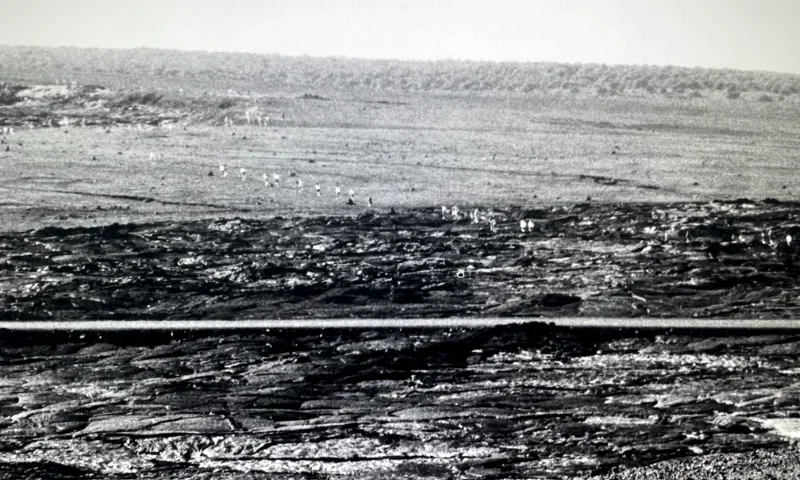
Land & Culture
Learn about the deep relationship between people and ʻāina in Native Hawaiian culture as well as past and present efforts to mālama (care for) Volcano's unique ecosystems.
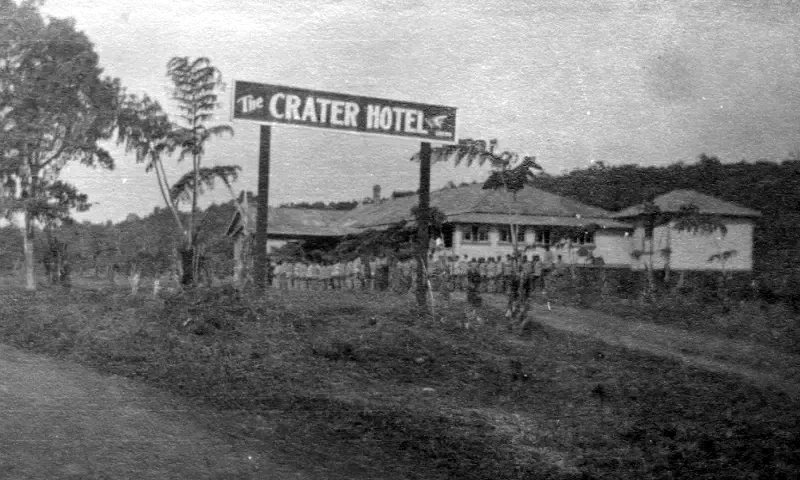
Historic Places
Learn the significance of Volcano's historic buildings and places that tell the stories of the village's growth, shared values, and everyday life across generations.
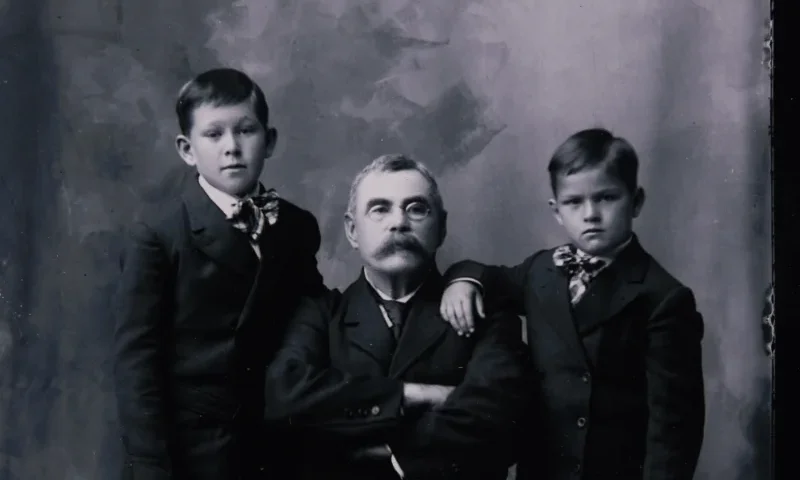
People of Volcano
Meet some of the outstanding people in Volcano's history who influenced and helped shape the village community into what it is today.
DONATE
Support Our Mission
Support our mission of preserving Volcano's past, meeting our community's present needs, and building its future. Please consider making a tax-deductible donation today.